Taxes
President orders targeted Tax Code amendments: what is proposed for SMEs and what is still only a draft
In his State of the Nation Address on 28 October, the President said the Tax Code is "not dogma" and ordered the government to remove contradictions and excess burden on entrepreneurs. A Kurultai committee is already discussing draft amendments, including a "clean slate" for micro and small businesses. As of 20 November this is only a draft, and reporting for 2026 is filed under the current code.
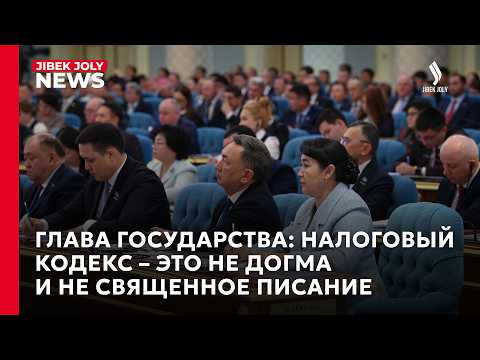
"The Tax Code is not dogma, not holy scripture," the President said in his State of the Nation Address on 28 October. In his words, a new tax reform inevitably raises questions. The government has been instructed to remove contradictions, rule out ambiguous readings of the rules, and get rid of imbalances and excess burden on entrepreneurs.
The same Address proposed discussing a higher rate for holders of large fortunes. The idea has no parameters yet.
What the Kurultai is already discussing
On 27 October, the day before the Address, the finance and budget committee of the Kurultai, Kazakhstan's parliament, held a themed session on the draft amendments to the Tax Code. The relevant ministries are still working on the draft, so the wording may change before it reaches parliament, and some ideas may be dropped. According to CDB.kz and Mybuh.kz, the draft includes:
- a conditional "clean slate" for micro and small businesses;
- wider personal income tax (IPN) deductions for people with disabilities;
- VAT refunds and additional VAT offsets in agriculture.
For its part, Atameken, the National Chamber of Entrepreneurs, is asking the government to review the rule that suspends the issuing of electronic invoices (ESF) for companies with tax debt. On 28 October MP Olzhas Kuspekov said that if the reform turns out to be a failure a year from now, a cut in the VAT rate could come up. That is an opinion. It is not a draft.
Tracker: what has been proposed and at what stage
Status checked on 20 November 2026.
| Rule | Proposed by | Status | Takes effect |
|---|---|---|---|
| Remove contradictions and imbalances in the Tax Code | President, 28 October | Instruction; ministries are preparing a draft | Not set |
| "Clean slate" for micro and small businesses | Discussed in a Kurultai committee, 27 October | Draft, no terms | Not set |
| IPN deductions for people with disabilities | Draft amendments | Under discussion | Not set |
| VAT refunds and offsets in agriculture | Draft amendments | Under discussion | Not set |
| Review the suspension of ESF issuing over tax debt | Atameken | Business request | Not set |
| Higher rate for large fortunes | President, 28 October | Proposed for discussion | Not set |
| VAT rate cut | MP O. Kuspekov | Opinion, not a draft | Not set |
Under the plan for implementing the Address dated 3 November, a package of targeted changes to tax legislation will be submitted to the Kurultai by the end of 2026. We will add effective dates once the draft is submitted to the Kurultai and it becomes clear which rules will apply from 1 January and which will be postponed.
What this means for sole proprietors, LLPs and large companies
Sole proprietors (IP) on the simplified regime and small LLPs (TOO in Russian) are the main target of the "clean slate". There are no terms yet. It is too early to change your accounting. The simplified regime rules for 2026 apply without changes.
VAT payers should keep budgeting at the current rate of 16%. Only individual MPs talk about a cut, and there is no government draft. We explain how the tax works now in our article on VAT in 2026.
Companies with tax debt have the biggest stake in the ESF amendment that Atameken is asking for. The current ESF issuing rules have not changed.
What to do
File your 2026 reporting under the current code. Details are in our overview of the 2026 Tax Code.
Collect examples of rules that get in the way of your work and send them to your regional Atameken chamber: the chamber is currently gathering such proposals for the amendments.
Watch for the date the draft is submitted to the Kurultai. We calculated what the 2026 reform changed in our research piece.
What it means for business
- The 2026 rules do not change: every idea listed here is a draft that had not been submitted to the Kurultai as of 20 November.
- A conditional "clean slate" mechanism is being discussed for micro and small businesses. Its parameters have not been published.
- Atameken is asking the government to review the suspension of electronic invoices for companies with tax debt.
What to do
- File your 2026 reporting under the current code. Do not wait for the amendments.
- Send Atameken your own cases with problem rules: e-invoices blocked over debt, deductions, VAT refunds.
Frequently asked questions
Has the Tax Code changed after the Address?
What is the "clean slate" for small businesses?
Will the VAT rate be cut?
Will there be a tax on large fortunes?
Sources
Figures on this page were checked against these documents. Spotted a mismatch? Tell the editors.
- President's State of the Nation Address to the people of Kazakhstan, 28 October 2026 · checked 20 November 2026
- Informburo.kz: full text of the 2026 Address · checked 20 November 2026
- Zakon.kz: full text of the President's Address published · checked 20 November 2026
- CDB.kz, 28 October 2026: Kurultai deputies discussed Tax Code amendments · checked 20 November 2026
- Mybuh.kz: Kurultai deputies discussed Tax Code amendments · checked 20 November 2026
- Forbes.kz, 28 October 2026: Kurultai deputies allowed for a VAT adjustment · checked 20 November 2026